
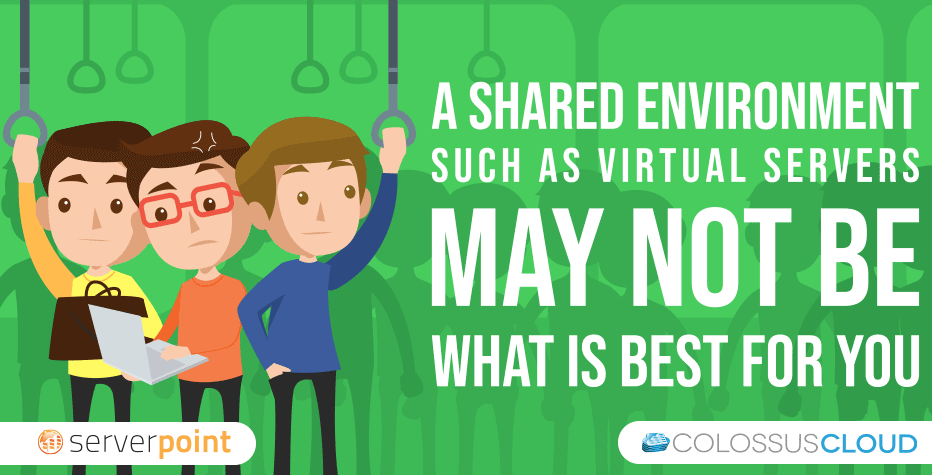
VPS hosting runs your virtual server on a shared hypervisor. That’s the whole point of virtualization: multiple VPS instances share one powerful physical host. It’s efficient, it’s cost-effective, and for most workloads it’s the right choice. But there’s a trade-off that matters for some use cases.
The shared infrastructure trade-off
When you run a VPS on a shared hypervisor, the hosting provider sometimes needs to reboot that hypervisor. Security patches like Spectre and Meltdown require host-level updates. Firmware updates, kernel patches, and occasionally hardware issues all require rebooting the physical host, which means restarting every virtual server on it.
We schedule these during maintenance windows and give notice when we can. But the reality is that you don’t get to choose the exact time, and your VPS will restart. For most applications (web servers, development environments, typical business apps), this is a minor inconvenience. You’re down for a minute during a planned window.
When that’s not acceptable
For some workloads, any unplanned restart is a problem. Long-running computations that can’t be checkpointed. Financial trading applications where even a minute of downtime costs money. Compliance environments where you need to control exactly when patches are applied and tested. In-memory databases that take a long time to warm up after restart.
If any of these describe your situation, a dedicated server gives you full control. You own the entire physical machine. Nobody else shares it. You decide when to patch, when to reboot, and when to upgrade. The trade-off is that a dedicated server costs more than a VPS, and if the hardware fails, recovery takes longer because we need to physically replace components.
The right choice depends on your workload
Most customers are well served by VPS hosting. It’s flexible, it’s affordable, the storage (Ceph SSD) is resilient, and the occasional maintenance reboot is a non-issue. For those who need bare metal control, our dedicated servers offer Intel Xeon Scalable CPUs, up to 768 GB RAM, and Samsung SSD or NVMe storage.
Some customers use both: a dedicated server for the critical database and VPS hosting for web front-ends that can tolerate a quick restart. Contact us if you want to discuss which setup fits your requirements.